
Rotate Rings
Nebula StudioPuzzle
4.82.32K Reviews
- Version
- 1.1.6
- Installs
- 10.00M
- Age Rating
- Everyone
Screenshots


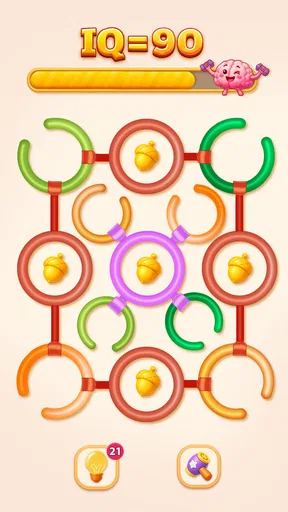
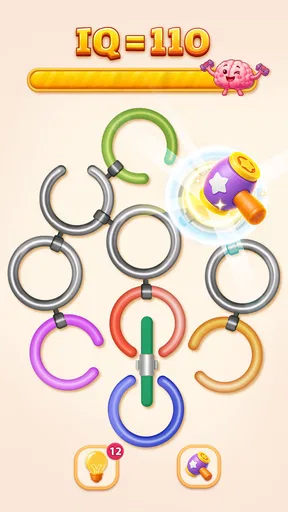
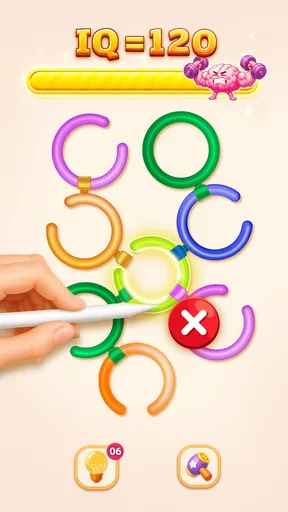
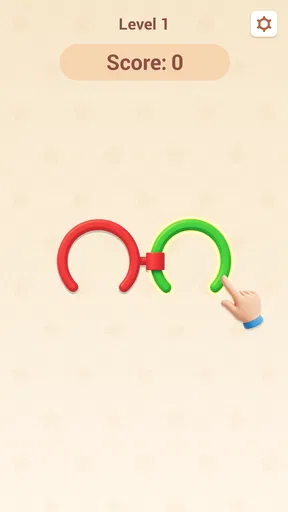
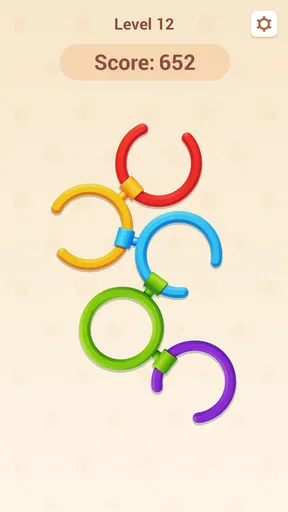
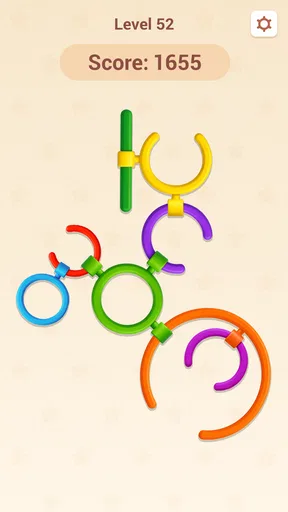
Our Review of Rotate Rings
 Analysis by Appyee
I like puzzle games that ask for a little attention without demanding that I clear my schedule, and Rotate Rings is built around a simple, tactile idea: turn rings until the puzzle makes sense. That makes it easy to understand before a session starts, but the appeal depends on whether you enjoy working through a visual logic problem at your own pace. I found the best way to approach it is to treat each move as a small test: rotate, look closely at what changed, then decide whether to keep going or rethink the arrangement.
Getting started with the rotation
As a puzzle game from Nebula Studio, Rotate Rings puts its central action right up front. The goal is to manipulate rings, so there is no complicated premise to learn before you can begin. The first useful habit is to pause briefly after each turn and inspect the whole arrangement rather than focusing only on the ring you moved. A rotation can look promising locally while making the overall pattern harder to read.
That makes the game a good fit for short breaks, waiting rooms, or a quiet moment before bed. I can imagine opening it while a kettle boils, solving a bit, and putting the phone down without needing to remember a long story or a complicated set of controls. The store describes it as playable offline, which is a practical advantage when you want a puzzle during a commute or somewhere with unreliable connectivity.
The main trade-off is also clear from the concept: this is for people who enjoy spatial reasoning and patient trial and error. If you want a puzzle with a narrative, a growing collection of unrelated mechanics, or a strong competitive angle, rotating rings may feel too focused. I would choose a broader puzzle collection for variety, but I would choose this when I want one visual problem to occupy my attention without a lot of setup.
Make each move informative
It is tempting to spin several rings quickly and hope the picture falls into place. I find that approach less useful than changing one thing at a time. After each move, take a mental snapshot of what aligned and what did not. Even when a turn is wrong, it can reveal how the pieces relate, which makes the next decision more deliberate. That simple workflow turns trial and error into reasoning rather than random tapping.
A helpful everyday use is a brief reset between demanding tasks. Instead of opening a fast action game that pulls me into a longer session, I can spend a few minutes tracing the visual relationships and then stop. The puzzle gives my attention something concrete to do, while the lack of a complex setup keeps the barrier to starting low. It is not a replacement for every kind of break, though: if I am already tired of concentrating, a quiet music app or a casual game with less visual analysis may feel better.
The rhythm of feedback
The satisfaction in a ring puzzle comes from seeing an arrangement improve as your choices narrow the possibilities. The important feedback is not just whether a move looks right, but whether it gives you a clearer reading of the pattern. I recommend checking for partial alignment instead of waiting for a perfect-looking result. Small signs of progress can help you avoid undoing a useful change simply because the whole puzzle has not clicked yet.
This style of play suits people who like to think in sequences. One turn suggests a possibility; the next tests it; a poor result tells you to adjust. That rhythm can be calming when I let myself work slowly, but it can become frustrating if I keep repeating the same move without learning from it. When I get stuck, I would stop and describe the visible pattern in plain terms, then choose one ring to test. A short pause often helps more than making a string of hurried rotations.
Compared with familiar match-and-clear puzzles, Rotate Rings asks for a different kind of attention. There is less emphasis on reacting to a changing board and more on understanding how a fixed visual arrangement can be changed through rotation. That makes it less suited to players who want constant new stimuli, but appealing to anyone who enjoys a puzzle that rewards observation. The offline play angle also makes it a more dependable pick for a small pocket of downtime than games that rely on a live connection.
What makes a solution satisfying
The reward here is the mental click of finding a coherent arrangement, not a promise of a particular prize or progression system. I like that distinction: it keeps the focus on solving the puzzle itself. The most satisfying turns are often the ones that confirm a theory you formed a moment earlier. To get more from that feeling, I would avoid changing multiple rings at once; otherwise, it becomes harder to tell which decision actually helped.
There is a small but useful discipline in deciding when to reset your thinking. If you have made several moves and the pattern is less understandable than when you began, do not defend the current arrangement just because you have invested time in it. Return to a clearer point in your reasoning and try another route. This is a practical puzzle-solving habit, not a claim about a particular undo or hint tool: the value comes from keeping track of your own choices and being willing to reconsider them.
For a parent choosing a gentle game to share with a child, its Everyone age rating makes it an accessible option to consider, though the child’s enjoyment will depend on whether they like visual logic. It can also work for adults who want a low-pressure mental exercise rather than a high-intensity challenge. If the person playing needs explicit instruction, frequent novelty, or a story to maintain interest, a more guided puzzle game may be the better choice.
When a session ends—and why another begins
A good short puzzle session ends when you have either found a satisfying arrangement or reached a point where you are no longer making useful observations. I would not force a solution just to keep playing. Put the phone down, then return later with fresh eyes; the pattern may be easier to interpret once you are not attached to the last sequence of moves. That makes the game suitable for uneven pockets of free time rather than only long, uninterrupted sessions.
The reason to come back is straightforward: the ring mechanic invites another attempt at making sense of a visual arrangement. That is a modest loop, and it will not satisfy everyone. Players who need a steady stream of unlocks, narrative chapters, or social competition should look elsewhere. But if the pleasure is in trying a clean idea, reading the result, and adjusting, the loop has a natural stopping point and an equally natural reason to begin again.
One practical question is whether the game costs anything to start. It is free to download, with optional in-app purchases listed from $0.99 to $9.99 per item. I would treat those purchases as a consideration rather than a reason to play: the core appeal is the act of solving, so decide for yourself whether any optional spending makes sense. The game is currently at version 1.1.6, and its minimum operating-system requirement is 7.1, which is worth checking against your device before installing.
Who I would recommend it to
The reception suggests that many players have found something to like: Rotate Rings has a 4.8 average from around 262,000 ratings, with roughly 2,300 written reviews and over 10 million installs. Those figures are encouraging, but they do not tell me whether its particular style will suit you. I would recommend trying it if rotating a visual puzzle sounds pleasant, especially if you value an offline option and prefer deliberate thinking to quick reactions.
I would be more cautious if you tend to lose patience when a puzzle does not explain itself through immediate progress. The loop asks you to observe, test, and sometimes abandon a line of thought. That is the point for a patient solver, but a source of friction for someone who wants every move to produce an obvious reward. If that sounds like you, a puzzle with clearer step-by-step guidance may be a better match.
Released on July 31, 2026, Rotate Rings is a free puzzle game for everyone, and its focused design is both its strength and its limitation. The short description is simply “Rotate Rings,” but the actual appeal is in the thinking between turns: choose a rotation, study the result, and decide whether it brought the arrangement closer to making sense. My verdict is that it is worth trying when you want a calm, self-contained logic challenge. It is not the pick I would make for story, variety, or fast thrills, but for a few thoughtful minutes—and the urge to return with a fresh attempt—it has a clear purpose.
Privacy and Permissions
See what permissions an app requests and how it handles your data.
- Wi-Fi connection information
- view Wi-Fi connections
- Other
- view network connections, full network access, control vibration, prevent device from sleeping, Google Play license check
Verdict
Strengths of Rotate Rings
- Simple controls make it easy to start playing.
- Short rounds work well for quick breaks.
- Ring rotation adds a satisfying spatial challenge.
- The rules are easy to understand without a tutorial.
- Progressively harder puzzles can keep players engaged.
Limitations of Rotate Rings
- Later levels may feel repetitive.
- Precise timing can be frustrating on small screens.
- Some puzzles may require repeated trial and error.
- The minimalist presentation may lack visual variety.
- It may offer limited appeal to players seeking a story.
Other Releases by Nebula Studio
View All


Similar Picks in This Category
View All
Block Blast!
HungryStudio4.8

Braindom: Brain Games Test
Lahana Game Studio4.6

AMAZE!
CrazyLabs LTD4.6

Sudoku - Classic Sudoku Puzzle
Oakever Games4.7

Art Puzzle - Puzzle Games
Easybrain4.8

Amaze GO!
Oakever Games4.9
Frequently Asked Questions
What is Rotate Rings, and what do you do in the game?
Rotate Rings is a casual puzzle game built around turning circular rings to arrange their sections into a required pattern or position. Its simple controls make it easy to try, but later puzzles may take more thought as you work out which ring to rotate and how one move affects the overall arrangement. The exact objectives and mechanics can vary by version, so check the store listing before downloading.
Is Rotate Rings easy to learn, and does it become challenging?
The central idea is straightforward: rotate the rings and look for a configuration that solves the puzzle. That makes the game approachable for new players and suitable for short sessions. The challenge comes from planning moves rather than mastering complicated controls; a ring that seems correctly positioned may affect another part of the puzzle. Difficulty, level design, and progression can differ between releases, so the store description and screenshots are useful guides.
Can I play Rotate Rings offline?
Whether Rotate Rings works without an internet connection depends on the particular version and how its features are implemented. Core puzzles may be available offline in some releases, while advertisements, online events, cloud saves, or other connected features may require a connection. Before travelling or switching off mobile data, try opening the game in airplane mode to confirm what remains accessible. Review the app listing for any stated online requirements.
Is Rotate Rings free to download, and does it include ads or in-app purchases?
The download price and monetization can depend on the platform, region, and version of Rotate Rings. A free listing may include advertising or optional purchases, such as hints or other extras, while another release may use a different payment model. Check the current Google Play or App Store page for pricing, in-app purchase details, and recent reviews. If children will play, consider setting purchase approvals and reviewing the app’s advertising experience.
What should I check before downloading Rotate Rings on Android or iOS?
Confirm that the listing is the version you intend to install, that your device meets its operating-system requirements, and that enough storage is available. Read the latest reviews for reports about crashes, intrusive ads, or difficulty, since experiences can change after updates. It is also sensible to check the developer information and privacy details before granting permissions. Download through the official Google Play Store or Apple App Store rather than an unverified third-party site.
Play our best games!


